Use AI to Polish Your Resume, Not Write It to Ruin in 2026
Stop letting ChatGPT erase your story. Learn a human-first framework to use AI as a ruthless editor, sharpening your resume without losing your unique voice, with actionable steps for 2026.

Daniel Kigozi
Remote Work & Freelance Coach
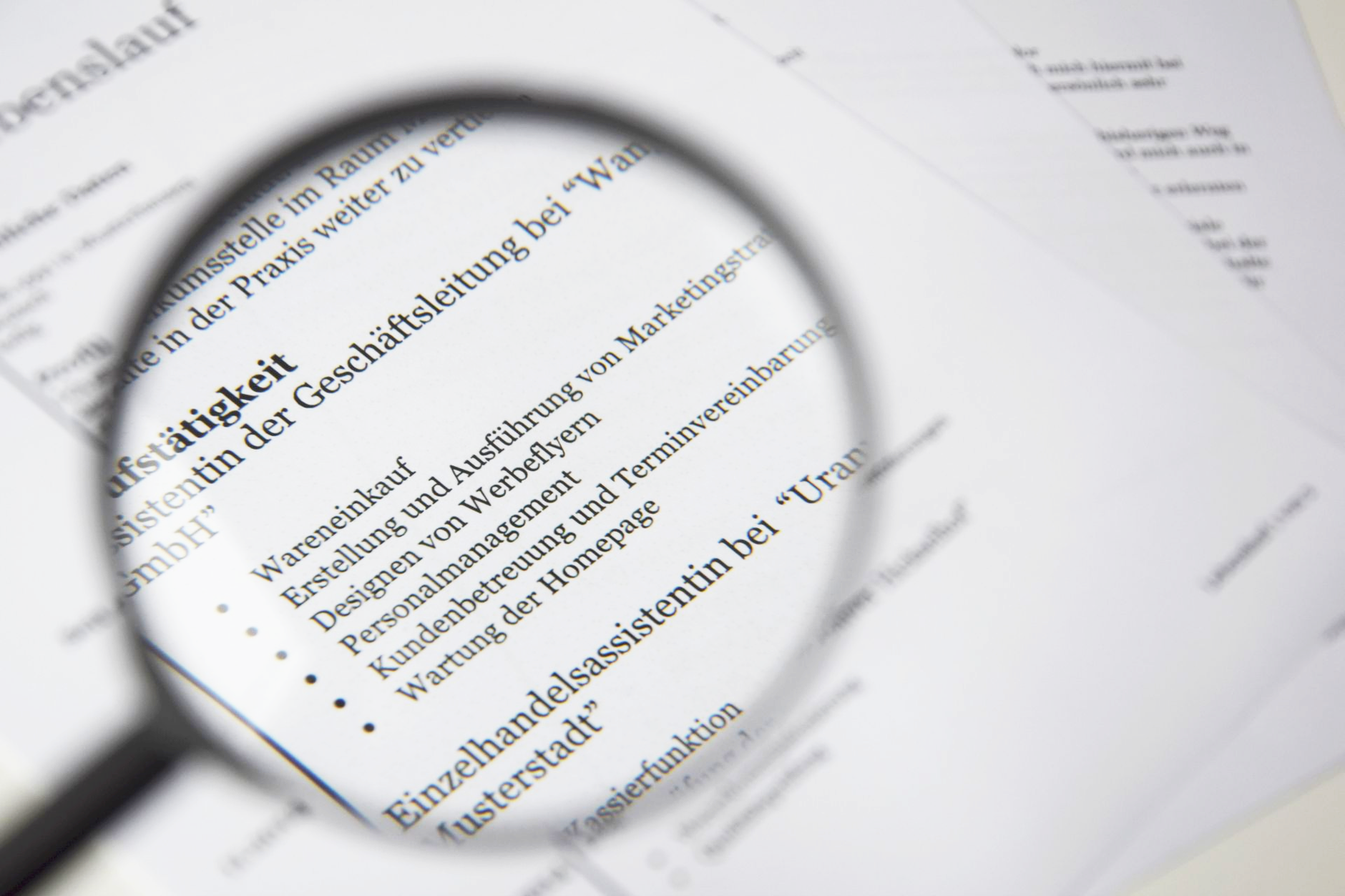
Photo on Pexels
The Great Resume Robbery
You have seen it happen. A recruiter glides through six seconds of your resume before tossing it into the digital abyss. Or worse, an applicant tracking system silently buries your application because your keywords missed the mark. Out of desperation, you turn to ChatGPT, hand over your entire career history, and wait for a miracle. What comes back is a sterile, buzzword-filled mess that reads like it was written by a committee of interns. Your grit, your specific wins, your unique story vanish into a fog of corporate jargon. This is not polishing. This is erasure.
AI is a powerful tool, but it becomes a dangerous master when you let it take the wheel. The trending conversation swirling through hiring forums and LinkedIn feeds is not about replacing human judgment. It is about augmenting it. The sharpest job seekers are learning a new skill: how to use AI as a precision instrument to sharpen their narrative, not to write it from scratch. You need to stop treating AI like a ghostwriter and start treating it like a ruthless editor who only improves what you already built.
Let me be brutally honest. If you let an AI write your entire resume, you are handing over your identity to a machine that has never fought through a tough project, navigated office politics, or felt the satisfaction of closing a deal. Your resume is not a list of duties. It is a marketing document for a product that is uniquely you. And you cannot outsource the soul of your story to a language model. Every line must breathe with your experience.
Why AI-Generated Resumes Smell Like Cardboard
Every week, I review dozens of resumes from engineers, marketers, and executives who have fallen into the AI trap. They all share a telltale sign: they read like a Wikipedia entry for a generic professional. Phrases like “leveraged synergies to drive cross-functional alignment” and “utilized data-driven insights to optimize operational efficiency” litter the page. These words are not technically wrong, but they are dead. They carry no emotional weight, no specific evidence, no human voice.
The problem is that large language models are trained on vast datasets of corporate writing, which is itself a swamp of cliches. When you ask an AI to write a resume from scratch, it averages out the most common, safest phrases. It produces something that is technically correct but utterly forgettable. Recruiters and hiring managers are not looking for correct. They are looking for compelling. They want to feel a spark of curiosity, a sense that this person actually did something remarkable, not just checked boxes.
Consider the difference. A human writes: “Managed a team of five developers to launch a mobile app that increased user retention by 40%.” An AI writes: “Led a cross-functional team to develop and deploy a mobile application, resulting in significant improvements in key performance metrics.” The first sentence breathes. It has numbers, a specific team size, a concrete outcome. The second sentence is a ghost. It says nothing real. The AI version is safe, but safe does not get you an interview. Every recruiter I know can spot an AI-written resume within seconds. They scan for the absence of specifics. When they find it, they move on.
The market is shifting. In 2026, authenticity is the new currency. Companies are tired of hiring candidates who sound perfect on paper but flail in interviews because their resume was a fabrication. The most viral career advice right now is not about using AI to write faster. It is about using AI to write better while keeping your soul intact. The candidates who will win are those who embrace technology without surrendering their humanity.
The Polishing Framework: Three Layers of AI Use
To use AI effectively, you must adopt a framework that keeps you in the driver’s seat. Think of it as three layers: clean, strengthen, and customize. Each layer requires you to bring your raw material first. Never start with a blank prompt. Always start with your own draft, no matter how rough. Your draft is the foundation. AI is the scaffolding.
Layer One: Clean the Noise
Your first draft will contain errors. Typos, awkward sentence structures, passive constructions, and redundant phrases. This is where AI shines. Feed your resume into a tool like Grammarly or directly into ChatGPT with a simple instruction: “Rewrite these bullet points for clarity and grammar, but keep every specific detail exactly as written.” Do not let it change your numbers, your examples, or your voice. Just ask it to clean the mechanics.
For example, you might write: “Was responsible for helping the team to improve sales numbers.” The AI can turn that into: “Increased quarterly sales by 15% through targeted outreach campaigns.” Notice the difference? The AI kept the core achievement but added specificity and active voice. But you must verify every change. Always cross-check that the AI did not invent a metric or change the nature of your contribution. AI hallucinates confidently. You are the fact-checker. If a bullet point says you saved $500,000, you better be ready to explain how in an interview.
This layer is about removing friction. You want your resume to be easy to read, not dazzling. Clean grammar and crisp sentences build trust. If a recruiter stumbles over a typo in the first three lines, they will assume you lack attention to detail. AI can fix that instantly, but only if you give it accurate raw material. Spend 15 minutes on this layer. It is the lowest effort for the highest return.
Layer Two: Strengthen the Impact
Once your grammar is sharp, you move to impact. This is where you ask AI to help you reframe your accomplishments using stronger verbs and clearer results. The key is to feed it specific context. Do not ask, “Make my resume better.” Ask, “I was a project manager who reduced server downtime by 30%. Rewrite that bullet to emphasize the cost savings and leadership angle.” The more constraints you give, the better the output.
Here is a real example. A software engineer wrote: “Fixed bugs in the payment system.” That is a duty, not an achievement. I asked the engineer to provide details. He said the bug was causing a 5% transaction failure rate. Together, we crafted: “Diagnosed and resolved a critical payment system bug that eliminated a 5% transaction failure rate, directly recovering over $200,000 in annual revenue.” The AI helped me structure the sentence, but the engineer supplied the numbers and the business impact. Without his input, the AI would have just said, “Resolved system issues.” That is the difference between a bullet point that gets a callback and one that gets ignored.
Use AI to generate three or four alternate versions of your best bullet points. Then pick the one that feels most authentic and powerful. Do not settle for the first draft. Treat AI like a brainstorming partner who never gets tired. But remember, you are the editor in chief. You decide what stays and what goes. If a version sounds too salesy or exaggerated, cut it. Your integrity is worth more than a flashy line.
Layer Three: Customize for the Role
This is the most strategic layer. You should never send the same resume to two different companies. Each job description is a puzzle, and your resume must fit the specific pieces. AI can be your scalpel here. Paste the job description into the prompt, then paste your base resume. Ask the AI: “Identify the top five keywords and themes in this job description. Then rewrite my resume to emphasize those specific skills and experiences, while keeping all my facts accurate.”
For example, if the job emphasizes “agile project management” and “stakeholder communication,” but your resume focuses on “waterfall methodologies” and “team management,” the AI can help you translate your experience into the language of the target role. You are not lying. You are reframing. If you managed a team using daily stand-ups and sprint planning, that is agile, even if you did not call it that. The AI helps you use the right vocabulary to get past the ATS and catch the recruiter’s eye. This step alone can double your callback rate.
But here is the critical warning. Do not let the AI fabricate experience. I have seen candidates get caught because their AI-generated resume included certifications they never earned or projects they never touched. That is fraud. The AI does not know what is true. It only knows what sounds good. You must double-check every claim. If you cannot defend it in an interview, delete it. Honesty is the only strategy that works long term.
The Human Element: Your Voice Is Your Superpower
After you have polished, strengthened, and customized, read your resume out loud. Does it sound like you? Does it reflect your personality, your energy, your way of thinking? If it sounds like a robot wrote it, throw it away and start over. The best resumes have a subtle signature. A marketer might use punchy, action-oriented language. A designer might weave in words that show empathy and user focus. A finance professional might emphasize precision and risk management. Let your natural voice bleed through the text.
Recruiters are humans. They get tired of reading the same formulaic resume five hundred times a day. When they encounter a resume that feels real, that has a human heartbeat, they pause. They read twice. They forward it to the hiring manager with a note that says, “This one is different.” That is the power you cannot automate. That is the power of owning your story.
One of my clients, a mid-level product manager, was struggling to get callbacks. Her resume was full of generic AI-generated phrases like “drove product vision” and “led cross-functional initiatives.” I asked her to tell me a story about a project that made her proud. She described how she discovered that users were dropping off at a specific form field, and she redesigned that field, leading to a 20% completion rate increase. We rewrote her resume with that story front and center. She got three interviews in two weeks. The AI did not write that story. She did. The AI just helped her polish the grammar and frame the impact. That is the balance you need to strike.
The Final Check: A 10-Minute Human Audit
Before you hit submit, do a 10-minute audit. First, print your resume on paper. Read it with a red pen. Mark every sentence that feels vague or generic. If you can swap your name with a colleague’s name and the sentence still works, it is too generic. Rewrite it with specific details. Second, ask a friend or mentor to read it and tell you what kind of person they imagine you are based solely on the resume. If they describe someone different from who you really are, you have lost your voice. Third, run the resume through an ATS simulator to check for keyword density. But do not obsess over keywords. A resume that reads well for humans will almost always perform well for ATS if you have done the customization layer.
Remember that AI is a tool, not a crutch. It can sharpen your sentences, suggest stronger verbs, and help you parse job descriptions. But it cannot replace the fundamental work of knowing yourself, your achievements, and your value. The most viral career advice right now is not about using AI to write faster. It is about using AI to write better, while keeping your soul intact. The candidates who will win in this market are the ones who embrace technology without surrendering their humanity.
So go ahead. Open your resume. Write your own story first. Then let the AI polish the edges. But never, ever let it write you into oblivion. Your career deserves a narrator who lived it, not one who calculated it.
Need Assistance with URA or URSB Filings?
Our professional advocates and corporate consulting desk handle company registrations, tax returns, and legal compliance manually. Join our channels to get immediate expert support:
Key Takeaways
Written By
Daniel Kigozi
Remote Work & Freelance Coach
Pioneering the East African gig economy, helping local talent land high-paying remote roles with international clients.