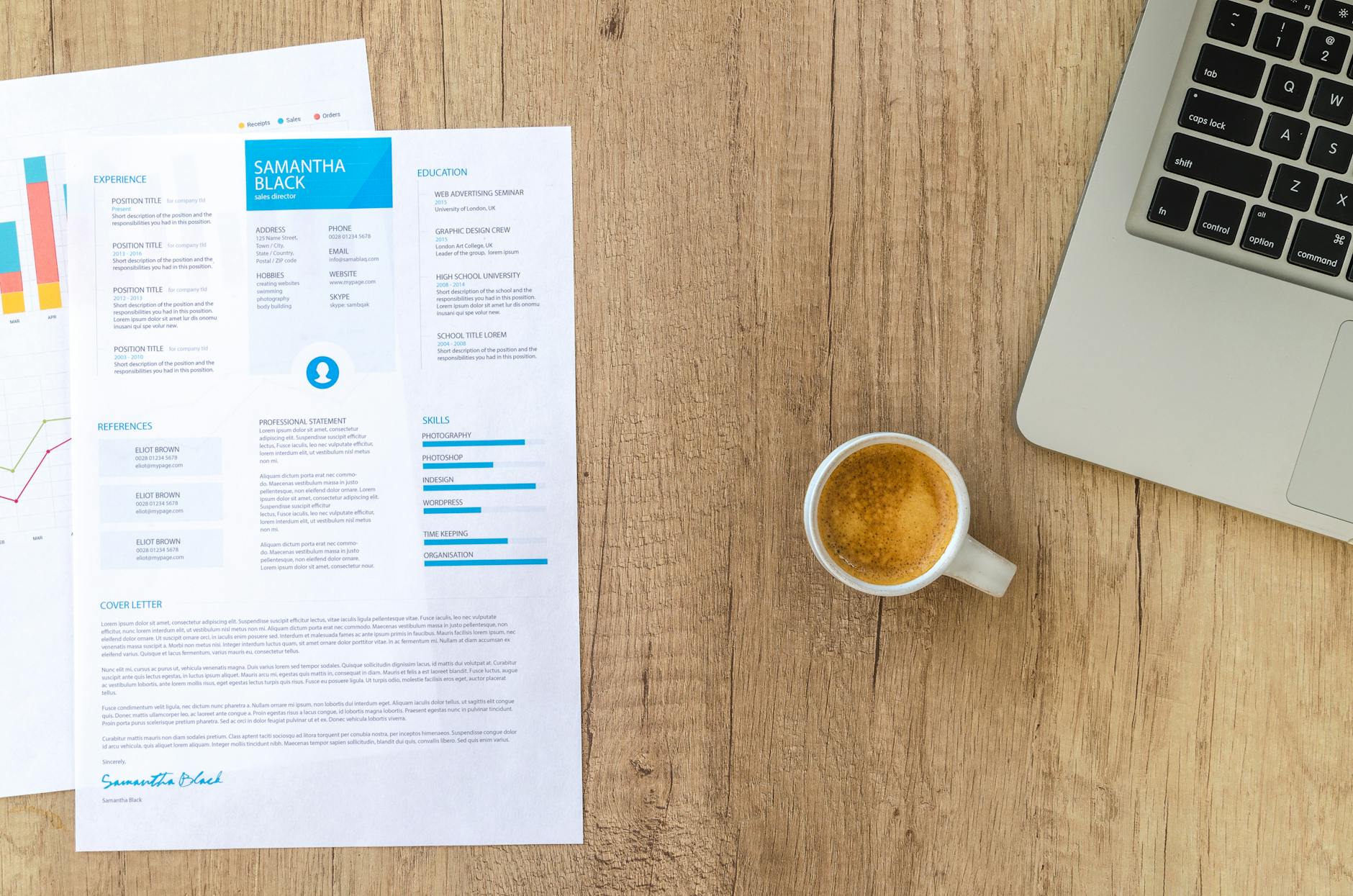
AI in Your Job Hunt: What Works, What's a Lie
Uncover the truth about using AI in your job search. From high-impact wins to dangerous traps, learn how to wield AI as a power tool without losing your human edge.

Daniel Kigozi
Remote Work & Freelance Coach

Photo on Pexels
The Silicon Valley Mirage: AI as Your Career Co-Pilot
Every week, I receive a message from a desperate job seeker. They have used ChatGPT to rewrite their resume, applied to 200 roles in a day, and heard nothing. Their fury is palpable. They believe AI is a scam. But I will tell you what I told them: AI is not a magic wand. It is a power tool. Like any power tool, it can build you a skyscraper or cut off your finger. The difference lies in knowing exactly where to apply the blade.
The job hunt has mutated into a beast that no human can tame alone. You face applicant tracking systems that reject you in milliseconds, interview loops that demand you perform like a Broadway star, and a market where ghosting is the new normal. AI, when used with brutal honesty, can be your shield and your sword. But if you treat it like a genie, it will waste your time. Let me show you the map.
Where AI Dominates: The High Impact Wins
Let us start with the obvious. AI is a demon for pattern recognition and data synthesis. Your resume is a data document. An ATS is a pattern matching machine. So using AI to optimize your resume for keywords is not cheating. It is speaking the same language as the robot gatekeeper. Tools like Jobscan or even a simple prompt in ChatGPT that asks, "Rewrite my resume to include these five keywords from the job description without sounding robotic" can triple your callback rate. I have coached a client who went from zero interviews to three in two weeks using this technique. The key is to feed the AI the exact job description and your raw experience. Let it do the translation. But you must review every word. If the AI says you "spearheaded synergy initiatives," delete that garbage. Keep it human.
Cover letters are another AI sweet spot. Nobody, and I mean nobody, enjoys writing cover letters. They are a necessary evil. AI can generate a first draft in seconds. But here is the trap: generic AI cover letters are worse than no cover letter. I have seen hiring managers laugh at letters that start with "I am writing to express my enthusiastic interest." That phrase is dead. Instead, use AI to brainstorm three specific reasons you fit the role based on the job description. Then write those reasons yourself, with your voice. The AI is your research assistant, not your ghostwriter.
Interview preparation is where AI truly shines. Pull the job description, ask AI to generate ten behavioral questions based on the key responsibilities. Then ask it to critique your answers. Record yourself speaking the answers, paste the transcript, and let AI point out where you rambled or used weak language. One client used this to prep for a Google interview and nailed it. He said the AI caught his habit of starting every answer with "So..." which made him sound unsure. He fixed it. He got the offer.
The Dangerous Illusions: Where AI Will Sabotage You
Now, the dark side. AI is a liar. Not on purpose, but it hallucinates. I have seen AI generate job postings for companies that do not exist. I have seen it recommend "customizing your resume for each application" by adding skills you do not have. That is a fireable offense. If you claim Python expertise and the interviewer asks you to write a quick script, you are done. AI does not know your limits. You do. Never let AI lie for you.
The biggest lie AI tells is that it can automate your entire job hunt. There are tools that auto apply to hundreds of jobs. They are a disaster. They spray your resume into the void. You get zero responses. Your confidence crumbles. I have seen this destroy people. The truth is, quality over quantity wins every time. A human reviewing each application, tailoring it with intention, and following up with a personal note will beat a bot every single day of the week. AI cannot replace the human touch of a genuine connection.
Another pitfall is using AI to write your entire LinkedIn profile. I can spot an AI written profile from a mile away. It sounds like a press release. It lacks soul. Your profile should sound like you talking to a friend at a coffee shop. Use AI to suggest improvements, but rewrite everything in your own cadence. The algorithm loves authenticity, and so do human recruiters.
The Strategic Blueprint: How to Use AI Without Losing Your Identity
Here is my personal system. I call it the 70-30 rule. 70% of your effort should be human driven: networking, personalized outreach, deep research on the company. 30% can be AI assisted: resume keyword optimization, cover letter drafting, interview question prep. Do not flip the numbers. If you spend more time talking to AI than to humans, you will lose.
Start your day by finding three jobs that genuinely excite you. Spend 20 minutes researching the company on Glassdoor, LinkedIn, and their blog. Write a custom note for the recruiter or hiring manager. Then use AI to polish your resume for that specific application. Apply. Then move on. Do not apply to fifty jobs in one day. That is a formula for burnout. Smart job hunting is about precision, not volume.
For networking, AI can help you draft a message, but you must edit it to sound like you. A message that starts with "I hope this message finds you well" is the equivalent of a robocall. Instead, use AI to identify a common interest or a recent accomplishment of the person. Then write something like, "Saw your post about the new cloud architecture. I worked on a similar migration at my last role. Would love to hear your take on the challenges." That gets replies. That builds bridges.
One more thing: track everything. Use a simple spreadsheet or a tool like Huntr. AI can help you analyze which strategies are working. For example, if you notice that applications where you included a personalized video get more responses, double down. AI can spot patterns you miss. Let it be your data analyst, not your decision maker.
The Final Truth: You Are the Differentiator
The market is saturated with candidates who used the same AI tools. The ones who stand out are those who use AI to enhance their uniqueness, not mask it. I have seen a candidate use AI to generate a list of unconventional interview questions, then answer them with personal stories that showcased their character. They got the job. I have seen another candidate use AI to write a thank you note that was so robotic the recruiter thought it was a spam bot. They were rejected.
AI is a mirror. It reflects your input. If you give it generic data, you get generic output. If you give it your raw, authentic experiences, it can help you frame them powerfully. The job hunt is a brutal test of resilience. AI can make the process faster and more targeted, but it cannot do the hard part: showing up as a real human being who is willing to learn, adapt, and connect.
So go ahead. Use ChatGPT to rephrase that bullet point. Use a resume scanner to check your ATS score. Use an interview bot to practice your STAR method. But then close the laptop. Pick up the phone. Send the handwritten note. Walk into the room and look them in the eye. That is where the magic lives. AI can open the door, but only you can walk through it.
Need Assistance with URA or URSB Filings?
Our professional advocates and corporate consulting desk handle company registrations, tax returns, and legal compliance manually. Join our channels to get immediate expert support:
Key Takeaways
Written By
Daniel Kigozi
Remote Work & Freelance Coach
Pioneering the East African gig economy, helping local talent land high-paying remote roles with international clients.