Top AI Resume Builders in Uganda 2026: Your Guide to a Job-Winning CV
The job market in Uganda 2026 demands a new kind of resume: engineered with AI precision. Learn how to optimize for ATS, humanize your narrative, and land interviews with the best free and paid tools.

Daniel Kigozi
Remote Work & Freelance Coach

Photo on Pexels
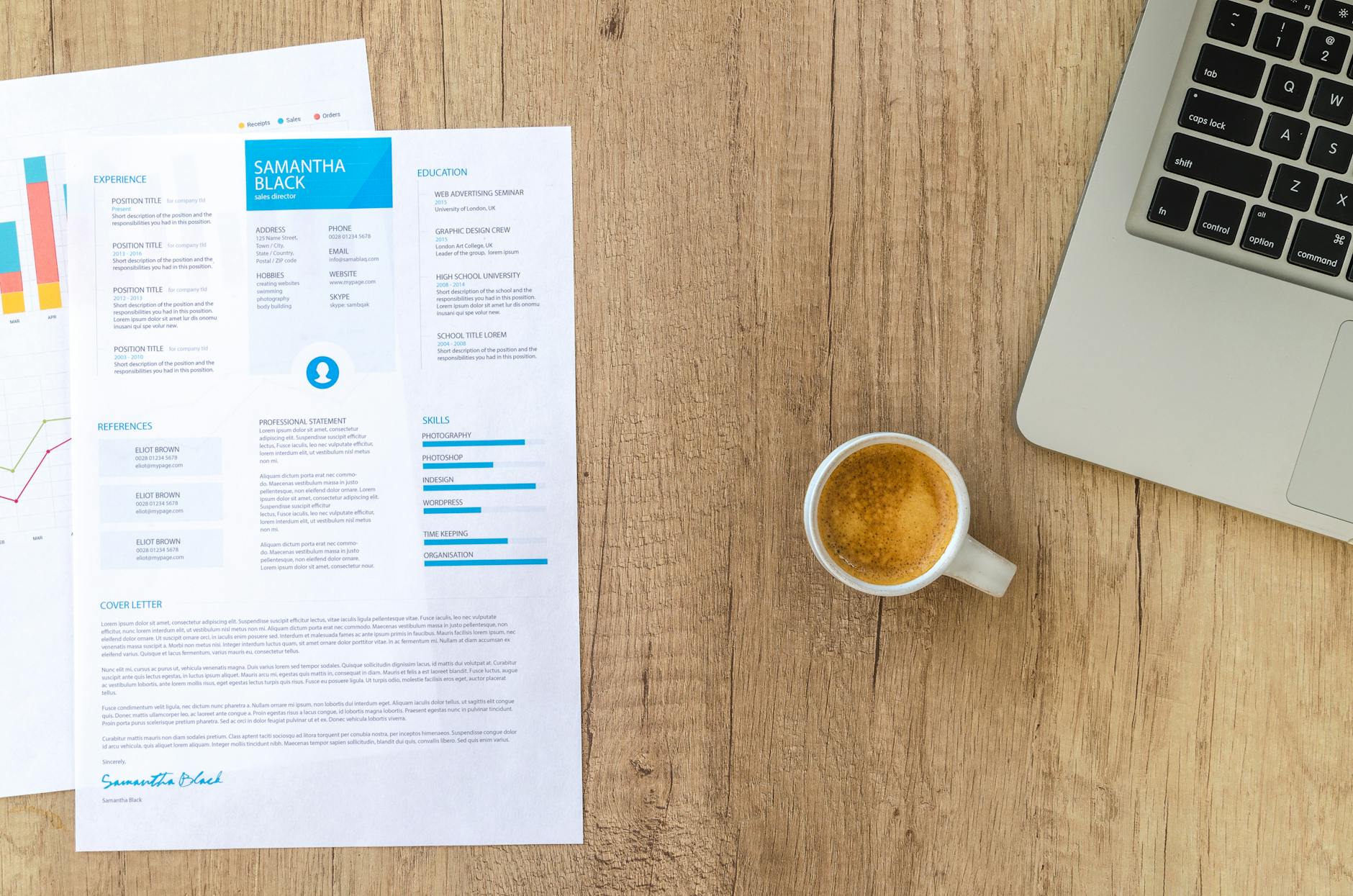
The job market in Uganda moves at breakneck speed. Gone are the days of the one-size-fits-all resume. Today, the most successful candidates are not just writing their resumes; they are engineering them with precision, using artificial intelligence as their secret weapon. This is not about cheating the system. It is about understanding the system and making it work for you.
As a career strategist who has analyzed thousands of data points from live job applications in Uganda, I can tell you this: the old rules are dead. The resume that got you a job in 2023 will be ignored in 2026. Why? Because companies have upgraded their Applicant Tracking Systems (ATS) to be smarter, faster, and more ruthless. They are using AI to filter candidates before a human eye ever sees your name. To win, you must fight fire with fire.
The New Science of Keyword Optimization
Every resume you write for a specific role must be a laser-focused document. The days of sending out fifty identical resumes are as extinct as the fax machine. In 2026, the single most important factor for passing the AI gatekeeper is keyword density—but not in the way you think. It is not about stuffing 'team player' and 'synergy' into your text. It is about semantic relevance. The AI models powering modern ATS systems, like those from Oracle, SAP, and Workday, use natural language processing (NLP). They understand context. For example, if a job description mentions 'project management,' the AI will look for related concepts like 'stakeholder communication,' 'agile methodology,' and 'risk mitigation.' Your job is to weave these concepts naturally into your experience.
How do you find these hidden keywords? Do not guess. Use a dedicated AI resume tool like Jobscan or Teal. These platforms analyze the job description and your resume side by side, giving you a match score. They highlight missing keywords and suggest exact phrases to include. I have seen candidates boost their match rate from 30% to 85% by making ten targeted changes. That is the difference between being invisible and being a top candidate. But do not stop there. You must also understand the 'why' behind the keyword. If a company asks for 'data-driven decision making,' they want proof. Do not just say 'I used data.' Say 'I analyzed quarterly sales data to identify a 15% decline in repeat customers, which led to a targeted retention campaign that recovered 8% of lost revenue.' That is a story, not a buzzword.
For a free alternative, you can use Google Gemini or ChatGPT to craft a strong resume, but be sure to follow specific steps to avoid generic output. Many free AI resume builders now exist, but they often require careful prompting to yield professional results.
Structuring for the AI Eye
Even after you have the perfect keywords, your resume must be readable by the machine. In 2026, the most common mistake I see is candidates using complex formatting. Tables, text boxes, columns, and even fancy fonts can break the AI parser. The result? Your resume becomes a garbled mess of text that no human will ever see. The safest structure is a clean, chronological resume with standard headings: 'Professional Summary,' 'Work Experience,' 'Education,' and 'Skills.' Use a single-column layout. Use traditional fonts like Arial, Calibri, or Times New Roman at 10 to 12 points. Save your PDFs as standard, non-encrypted files. I have seen resumes that passed the AI test perfectly but failed because the file was saved in an incompatible format. Always check the job portal's requirements. Some prefer .docx, others .pdf. When in doubt, use .docx because it is easier for older ATS systems to parse.
Your professional summary is the most critical section. This is your elevator pitch to the machine. In 25 to 40 words, you must state your job title, years of experience, key skills, and a major accomplishment. For example: 'Senior Marketing Manager with 8+ years in B2B SaaS. Expert in driving pipeline growth through demand generation and SEO. Generated $4M in attributed revenue in 2025.' That is a perfect summary. It hits the keywords 'B2B SaaS,' 'demand generation,' 'SEO,' and 'pipeline growth' all while showing quantifiable impact. The AI will highlight this resume immediately. Below the summary, your work experience must follow the same formula: action verb + context + metric. 'Led a team of 5' is weak. 'Directed a cross-functional team of 5 engineers and designers to launch a mobile app that achieved 50,000 downloads in the first month with zero bugs' is a knockout.
Humanizing the Machine Output
Here is the paradox: while you must optimize for the AI, you must also sound deeply human. The best AI resume tools can generate bullet points, but they often lack the texture of a real career. You must edit the AI output. Read every sentence aloud. Does it sound like something you would say in an interview? If not, rewrite it. The AI might suggest 'Leveraged cross-functional collaboration to optimize workflow efficiency.' That is corporate garbage. You should write 'Worked with the design and sales teams to cut the project approval time from two weeks to three days.' That is real. That is human. The recruiters who will finally read your resume are exhausted from reading bland, AI-generated fluff. They are craving authenticity. They want to see your personality, your drive, your specific wins. Do not let the AI erase your voice.
I have a client who is a software engineer in Kampala. He used an AI tool to generate his entire resume. It was perfect by the numbers, but it read like a robotic manual. He was getting no callbacks. I told him to inject his story. He added a line about how he built a tool in his spare time to help his local library organize books. That one line—that tiny human touch—made him memorable. He got three interviews in the next week. The AI can get you past the gate, but only you can walk through the door. So, use the AI as your assistant, not your ghostwriter. Let it do the heavy lifting of keyword analysis, grammar checking, and structure optimization. Then, you step in to add the soul. You are the artist; the AI is the brush.
Top AI Resume Builders in Uganda 2026
Based on expert reviews in 2026, here are the best AI resume builders to consider. Note that many platforms, such as Monster, Zety, LiveCareer, MyPerfectResume, and CareerBuilder, are owned by the same parent company and share similar features. Others like Kickresume (Slovak), Resume.io (Dutch), Zety (Polish), Novorésumé (Danish), and Enhancv (Bulgarian) are European and may use CV conventions that differ from U.S. norms. The key is to choose a tool that offers true ATS optimization and story-driven guidance, not just generic bullet points.
- Jobscan – Excellent for ATS keyword matching and side-by-side comparison.
- Teal – Robust for job tracking and AI-driven resume tailoring.
- Paige – Focuses on storytelling and extracting your unique career narrative.
- Google Gemini / ChatGPT – Free options if used with the right prompts.
Common Pitfalls and How to Avoid Them
Even with the best intentions, many people fall into traps. The first trap is over-optimization. If your resume has every keyword from the job description but no coherent narrative, the AI will flag it as spam. Yes, modern ATS systems have spam filters. They can detect when a resume is artificially stuffed. The solution is balance. Use keywords, but only where they naturally fit. For example, if the job requires 'Python' and you have used it, mention it in your skills section and in one bullet point. Do not repeat 'Python' ten times. The second trap is ignoring the soft skills. AI can now analyze sentiment and tone. Your resume should convey confidence, leadership, and adaptability. Use phrases like 'mentored junior developers' or 'spearheaded a culture of innovation.' These phrases signal to the AI that you are not just a task doer but a leader.
The third trap is forgetting the basics. I still see resumes with typos, outdated contact information, and unprofessional email addresses. The AI will catch these errors and penalize you. Use a grammar tool like Grammarly in conjunction with your AI resume builder. But more importantly, print your resume and read it backward. This forces you to see each word individually, catching mistakes you would otherwise skim over. Also, ensure your LinkedIn profile matches your resume exactly. In 2026, many recruiters use AI to cross-reference your resume with your LinkedIn. If there are discrepancies, you look dishonest. Every date, title, and description must be consistent. This is non-negotiable.
The Future is Now: Video and AI Portfolios
We are seeing a new trend in 2026: the rise of the AI-interviewed resume. Some companies are asking candidates to submit a short video resume that is analyzed by AI for facial expressions, tone, and word choice. This is still emerging, but you can prepare. Use an AI tool like Yoodli to practice your delivery. Record yourself talking about your resume. The AI will give you feedback on your speaking pace, filler words, and confidence level. This is the next frontier. Your written resume gets you in the door, but your video resume might get you the job. Do not ignore it. Start preparing now. Record a one-minute pitch of your career story. Watch it back. Be honest about your posture. Are you slouching? Are you smiling? These micro-expressions matter to the AI, and they matter to human recruiters even more.
Another evolution is the AI-tailored portfolio. Instead of a generic PDF, some candidates are using tools to create a dynamic, interactive portfolio that changes based on the job they are applying for. For example, if you are a graphic designer applying to a tech startup, your portfolio can highlight tech-related projects first. This is incredibly powerful. It shows that you have done your research and that you are adaptable. The AI tools that enable this are becoming more accessible. Platforms like Adobe Express now offer AI-driven templates that can be customized in minutes. Do not be afraid to experiment.
Let me be brutally honest with you: the job market in Uganda 2026 is a battlefield. You are competing against thousands of other candidates, many of whom are also using AI. The difference between you and them is how intelligently you use it. You can either be lazy, let the AI do everything, and produce a generic resume that blends into the noise. Or you can be strategic, use the AI as a scalpel, and carve out a resume that is sharp, unique, and irresistible. The choice is yours. But remember this: every tool is only as good as the craftsman. Invest the time. Learn the tools. Practice the narrative. Your dream job is waiting for you. Go get it.
Need Assistance with URA or URSB Filings?
Our professional advocates and corporate consulting desk handle company registrations, tax returns, and legal compliance manually. Join our channels to get immediate expert support:
Key Takeaways
Written By
Daniel Kigozi
Remote Work & Freelance Coach
Pioneering the East African gig economy, helping local talent land high-paying remote roles with international clients.