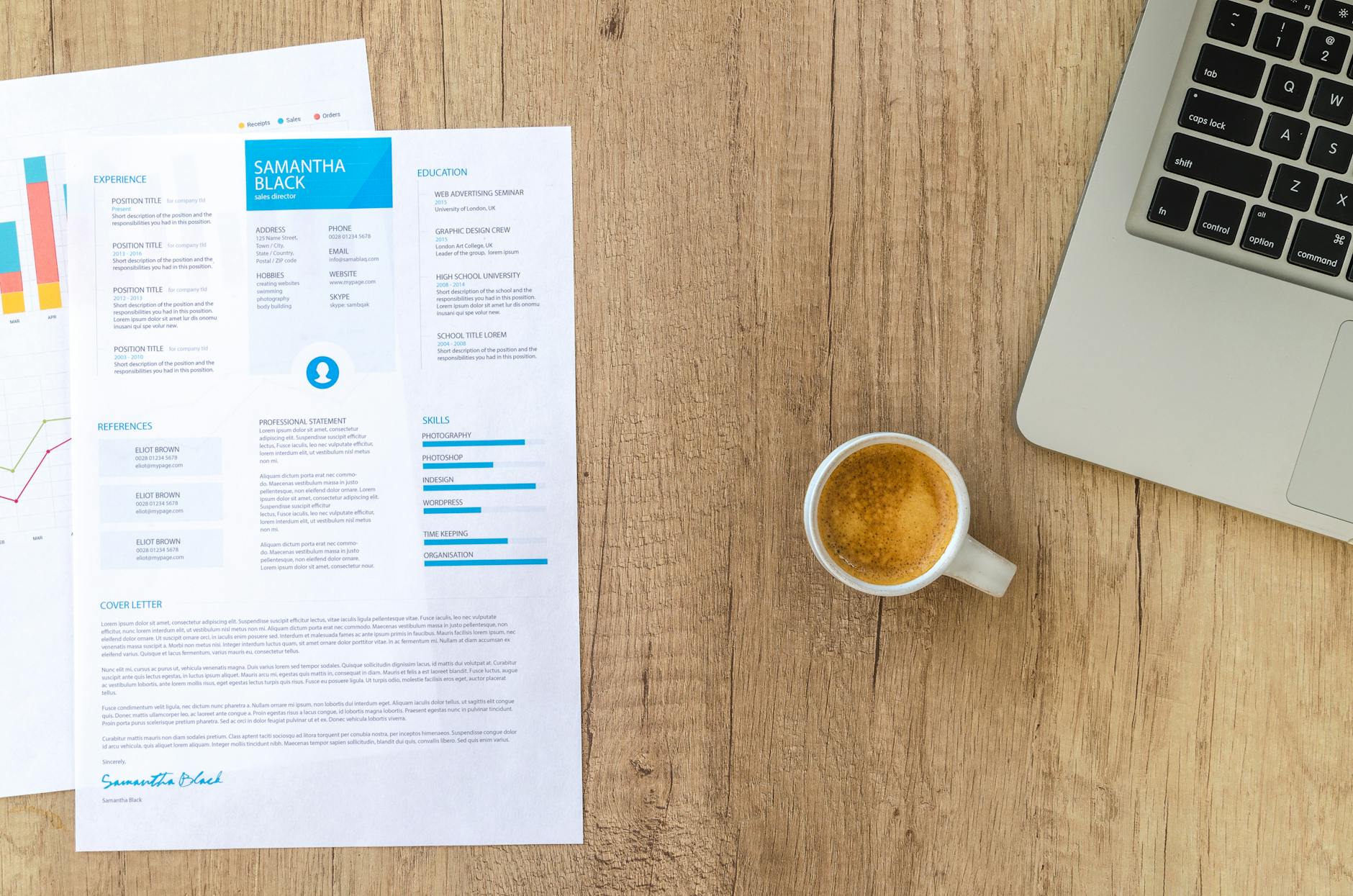
AI Resumes Are Dead: Recruiters See Through Them in 2026 — Here's How to Beat the Detectors
Recruiters can spot an AI-generated resume in seconds. Learn why automation is killing your job search and how to reclaim your authentic voice for real career success in 2026.

Daniel Kigozi
Remote Work & Freelance Coach

Photo on Pexels
The narrative has shifted. For months, career influencers and tech platforms whispered about the golden age of the AI resume. You could feed a chatbot your job history, watch it spit out a perfectly formatted document, and blast it to hundreds of openings. It felt like cheating, but in a good way. Except now, the air has changed. Recruiters are not just annoyed; they are actively hunting for the telltale signs of machine-written applications. The hard truth for job seekers in 2026 is that your AI resume isn't fooling anyone. It might be getting you filtered out faster than a typo-laden disaster.
Let's be brutally honest about what is happening inside applicant tracking systems and the human brains behind them. You have probably spent hours tweaking prompts, begging an LLM to sound more 'human,' only to get ghosted. The problem is not the technology itself. The problem is that most people use it as a crutch instead of a tool. They outsource their own career narrative to a probability engine, and the result is a generic, soulless blob of keywords. Recruiters see the same sentence structures, the same bland action verbs, the same lack of personal risk. They know. And they are tired of it.
The Great Reveal: What Employers Actually Spot in 2026
Every week, I talk to hiring managers at top tech firms, Fortune 500 companies, and scrappy startups. The consensus is chilling. One senior recruiter at a major cloud provider told me she can detect an AI resume within ten seconds. She looks for the absence of friction. Real human resumes have quirks. They have slightly awkward phrasing in one line and a brilliant, unexpected insight in the next. They show a career trajectory that sometimes zigzags. AI resumes, by contrast, are perfectly smooth. They are grammatically flawless, logically structured, and utterly devoid of personality. They read like a Wikipedia entry for a person who never made a mistake.
Specifically, employers are flagging resumes that use overly generic language. Phrases like 'leveraged cross-functional teams to drive synergy' are dead giveaways. Real people do not talk like that. They say 'I worked with the design team to fix the broken checkout flow.' They use concrete numbers and specific tools. AI tools, even with fine-tuning, tend to default to corporate jargon because that is the most common language in their training data. If your resume looks like it was written by a committee of fifty HR bots, you lose. The second flag is the lack of narrative flow. A human story has a beginning, a middle, and a personal struggle. An AI resume is a list of duties, beautifully formatted, but with no soul.
The Tipping Point: When Automation Hurts You
There was a moment last year when the scales tipped. Initially, AI resumes worked because they were novel. They helped people who struggled with writing. But as the market flooded with AI-generated applications, the signal became noise. Now, employers are using AI to detect AI. There are tools that analyze writing patterns, sentence entropy, and vocabulary distribution to flag candidates who likely used automated generation. According to recent data from Resume Geni, 77% of employers actively scan for AI content, while Dice reports that nearly half of AI-generated resumes are automatically dismissed. If your resume scores high on 'machine-likeness,' you get moved to a low-priority pile. It is an arms race, and right now, the job seekers are losing because they are using the same weapons.
You cannot afford to be lazy. The biggest mistake I see is people who take their old resume, paste it into a chatbot, and ask it to 'optimize for ATS.' The result is a document that ticks keyword boxes but fails the human sniff test. Employers do not just want a list of skills. They want evidence of impact, context, and adaptability. They want to know how you handled conflict, how you failed, and how you iterated. An AI cannot generate that from a job title. It can only fabricate it. And fabrication, in a world where background checks and reference calls are more thorough than ever, is a dangerous game.
How to Use AI Without Being a Fool
Let me be clear: I am not telling you to abandon AI. That would be stupid. AI is an incredible research assistant, a formatting expert, and a grammar checker. The key is to use it as a partner, not a ghostwriter. You must be the human in the loop. Start by writing your resume draft from scratch. Do not open a chatbot. Write down your actual accomplishments, the messy stories, the times you saved a project from disaster. Use your own voice, even if it is messy. Then, use AI to clean up the grammar, suggest better synonyms, and ensure your formatting is consistent. But you must rewrite at least thirty percent of the AI suggestions to keep your personal rhythm.
Another powerful technique is to use AI to stress-test your resume. Feed it the job description and ask the tool to identify gaps or weak points. Then, you go and fill those gaps with real experiences. Do not let the AI write the bullet point for you. Write it yourself, then ask the AI if the phrasing is clear. This approach maintains your authenticity while leveraging the machine's speed. The best resumes in 2026 are those that read like a brilliant, slightly imperfect human wrote them. They have varied sentence lengths. They take risks with language. They sometimes use a short sentence for emphasis. That is the fingerprint of a real person.
The Personal Brand Defense
Your resume is not a document. It is a marketing asset for your personal brand. And brands are built on differentiation. If you sound like every other candidate who used the same AI prompt, you are a commodity. To stand out, you need to inject specific, personal details that no algorithm would generate. Mention the name of the colleague who mentored you. Describe the exact moment you realized your solution worked. Talk about the conference talk you gave and the awkward question you answered brilliantly. These micro-stories are impossible for an AI to fake convincingly because they are too specific. They signal to a recruiter that you are real, that you think deeply, and that you are worth a conversation.
I have seen candidates transform their job search by simply deleting the first paragraph generated by AI and replacing it with a two-sentence personal mission statement. For example, instead of 'Results-oriented professional with 5 years of experience seeking challenging role,' write 'I fix broken data pipelines so analysts can actually trust the numbers. Five years ago, I was a junior analyst who couldn't find clean data. Now I build the systems that keep it clean.' That is human. That is compelling. That is not something a language model writes without deep, specific input from you.
The Future of Job Applications Is Hybrid
We are moving into an era where the application itself is a test of your judgment. Can you use powerful tools without being swallowed by them? Employers are watching. They are analyzing your communication patterns in cover letters, in interview responses, and even in your follow-up emails. If you use AI for everything, you will eventually slip, and that slip will cost you the job. The winners will be the people who treat AI like an intern: they give it tasks, review its work, and take full ownership of the final product.
Consider the cover letter. Do not use a template. Write a raw, honest letter about why you want this specific job at this specific company. Mention a product they built that you love, a blog post from their CEO that inspired you, or a problem you know their team is facing. Then, use AI to fix your typos and tighten the language. The result will be a letter that feels both professional and deeply personal. That combination is what moves you from the 'maybe' pile to the 'call immediately' pile.
Let me give you a practical workflow that I use with my private clients. First, spend thirty minutes writing a 'stream of consciousness' document about your career. No editing, no structure. Just memories, achievements, and failures. Second, use AI to extract potential bullet points from that raw text. Third, take those bullet points and rewrite them in your voice. Fourth, ask AI to check for passive voice and jargon. Fifth, delete any phrase that could have been written by a corporate robot. The result is a resume that scores high on both ATS algorithms and human readability. It is not faster than pure automation, but it is infinitely more effective.
Why Authenticity Wins Every Time
In a world flooded with synthetic content, authenticity is the new luxury. Recruiters are desperate for real human connection. They want to hire someone who can think, adapt, and communicate with nuance. An AI resume signals the opposite: that you took the easy path, that you are risk-averse, and that you might not have the critical thinking skills needed for complex roles. That is a brutal judgment, but it is the reality of the 2026 job market. The bar for 'good enough' has risen. You cannot just look good on paper. You have to sound like a person who can walk into a room and solve a problem.
I have seen candidates with objectively weaker experience get the job over highly polished candidates because their resume felt real. They told a story of growth. They admitted to a failure and explained what they learned. They used language that felt conversational, not transactional. Those candidates passed the human test. They made the recruiter feel something. And in a process that is increasingly automated, making a human feel something is your single greatest advantage.
So, here is the bottom line: yes, use AI. Use it to research companies, to analyze job descriptions, to proofread your documents, and to practice interview questions. But never, ever let it speak for you. Your career story is yours alone. It deserves your voice, your mistakes, and your unique perspective. The moment you hand the microphone to a machine, you lose the very thing that makes you hireable. Be smart. Be human. And let the robots handle the formatting.
Your next job is waiting. But it will not be won by a prompt. It will be won by a person who understands that the best tool in their kit is their own mind. Use AI wisely, but trust yourself first. That is the only strategy that will never be obsolete.
Key Takeaways
Written By
Daniel Kigozi
Remote Work & Freelance Coach
Pioneering the East African gig economy, helping local talent land high-paying remote roles with international clients.